Development of a client profile and assessment of individual client needs. Determine the level of assistance required to complete activities of daily living.
INTRODUCTION
For the purposes of this assignment the author will endeavour to:
- Develop a client profile and carry out an assessment of the individual client need.
- Determine the level of assistance required to complete the activities of daily living.
- Maintain the clients safe environment.
- Promote the clients involvement in social events and therapies.
- Mobility including falls and pressure area care.
- Effective verbal and written communication with the client and the healthcare team.
- Assist the client with the activities of daily living.
- Promote the rights of the client to dignity, privacy, independence and positive self-image.
DEVELOPMENT OF A CLIENT PROFILE AND THE ASSESSMENT OF THE INDIVIDUAL CLIENT NEEDS
When a client is admitted to a facility such as a nursing home, as in this case, the clients confidentiality is of paramount importance and has to be protected. Guided by the data protection act 2003, the author will protect the clients anonymity by changing the clients name, referring to her as Betty White throughout the assignment.
The methodology used was independent research via the internet, tutor input and class notes.
CLIENT PROFILE
Betty is a 79 year old lady. Premorbidly, she lived and active and productive life. Born in Dublin in 1928, was brought up in a working class family; her father worked for Guinness and her mother was a school teacher. She had two brothers (twins) and one sister. As her parents were fanatically secure, Betty and her siblings had the luxury of attending secondary school and had yearly family holidays.
Betty had lived in the family home all her life, even after marriage. She cared for both her parents when they became elderly; both now deceased, dying twenty 20 years ago, only six months apart.
Betty got married when she was twenty two years old; was happily married for fifty three years. She had two boys whom she adored and idolised. Mick was killed in a freak accident by a hit and run driver on his way home from his local pub four years ago!!
By profession, Betty was a Primary school teacher, following in her mums footsteps. She eventually was promoted to the Principal of the school. However, Betty always regretted taking this post as her passion was in teaching.
Her favourite subjects were Irish and History. She also loved Music and would conduct the school choir for Communions, Confirmations and Nativity plays.
Betty had a few pastimes, including reading, painting and watching the Late Late Show religiously every Saturday night. She also enjoyed listening to Terry Wogan on the radio.
Betty had two Yorkshire terriers that she absolutely adored. Jack, her eldest son, bought Betty the dogs for her shortly after her husband died to distract her and to keep her company. She regularly groomed them and walked them twice daily. She referred to them as her babies. Unfortunately, Betty was forced to give them away about a year ago. Jack was working abroad for a period of time and was unable to visit her. When he returned, he was shocked to see that Betties dogs had become emaciated and matted. Betty was forgetting to feed and groom them which was not like Betty who had always being so particular about her babies. Jack had noticed that his mum was becoming forgetful before his trip but had put it down to old age. He couldnt believe Bettys deterioration and immediately contacted her GP. Betty was eventually diagnosed with Alzheimers disease.
Betty started smoking shortly after getting married; she had being influenced by some movies she had seen with Mick, her husband. She smoked around twenty cigarettes daily. She particularly enjoyed her first one of the day and especially after meals with a nice cup of tea. Despite numerous efforts from her children encouraging their mum to give up the cigarettes, Betty smokes to this day.
ASSESSMENT
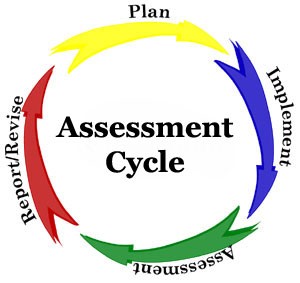
The author had and in depth discussion with her mentor in order to gain and insight into how Betty was initially assessed. She explained that Bettys assessment began as soon as she entered the ward.
Betty was accompanied by Jack, her eldest son; she walked into the ward with the aid of a Zimmer frame; Jack had to intermittently remind her to keep going straight and explain to her where she was. Betty had to stop on occasion to catch her breath. When she stopped, the authors mentor recalled that she clapped her hands and quite loudly said look at them over there! Theyre nice and clean, so they are! Jack replied Yes they are Mam, Betty clapped her hands again and replied Yeah, we just need six, six will be plenty!.
Betty appeared slightly dishevelled, her hair was tossed, her blouse was slightly stained. When she sat down with guidance, the authors mentor noticed a distinct smell of urine. She appeared pleasant and was smiling. On interaction, she spoke loudly and Jack had to prompt her to turn on her hearing aid. Jack privately apologised for her appearance and explained that she had being particularly confused of late and had refused to change that morning.
Although Betty was clearly confused on admission, she had intermittent moments of lucidity. This enabled the authors mentor to gain some of the information she required to carry out her assessment. She also had to rely on Jacks input to gain a Holistic insight.
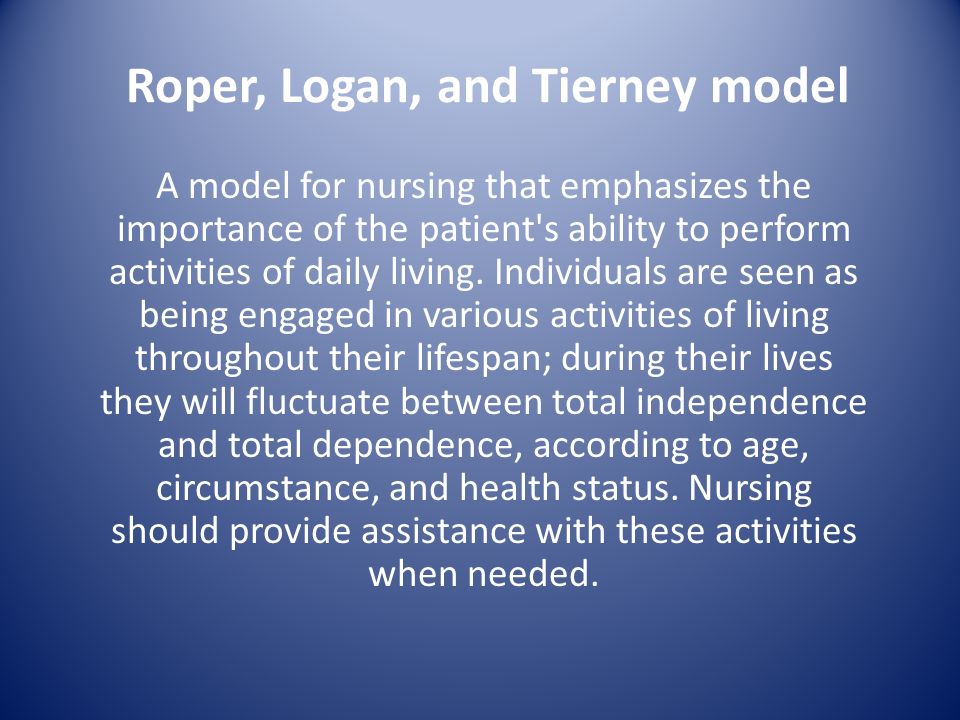
The Assessment was guided by a Nursing diagnosis using the Roper, Logan and Thierey model, firmly underpinned by Orems self-care model.
There are five steps in the Nursing Process: Assessment, Diagnosis, Planning, Implementing and Evaluation.
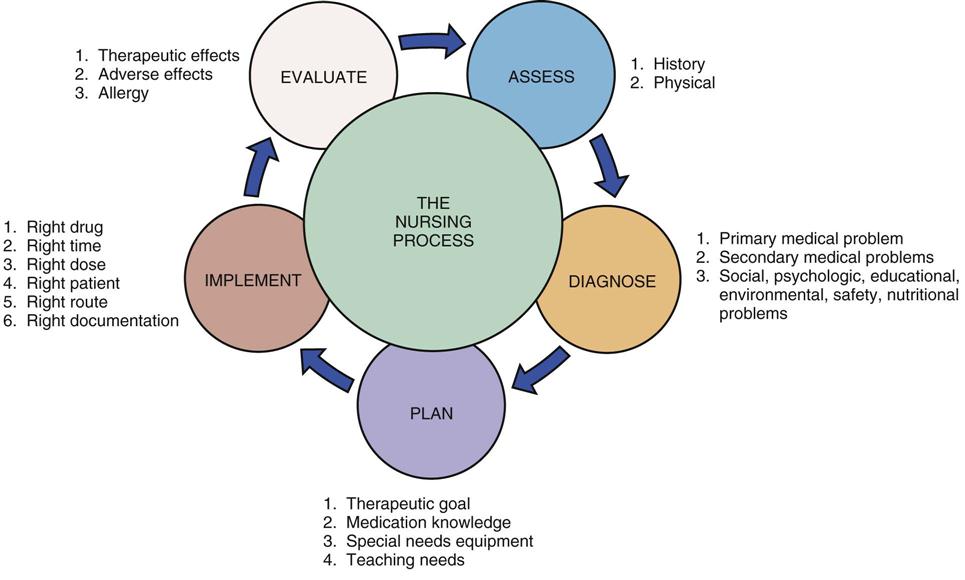
Assessment is the first phase; the authors mentor had to gain the information required in a holistic approach, assessing Bettys physical, intellectual, emotional and spiritual needs.
PHYSICAL ASSESSMENT
The nurse collected data in a variety of ways. Initially, she took and recorded Bettys general observations, BP, Pulse, Temp., Respirations, height, weight and urinalysis (with difficulty, as Betty required a lot of prompting). All of Bettys observations were within the normal range except for her temperature (38 degrees) and the urinalysis, where the nurse noticed that she had protein urea. This discovery explained why Betty had been confused more than normal as Jack had expressed earlier. She then took Bettys health history relying heavily on Jacks input. After gaining the required information the nurse carried out a pressure area risk assessment using the waterlow scale. This assessment tool was developed by Judy Waterlow, a clinical nurse tutor in 1985. The tool enabled the nurse to make an estimated risk to determine Bettys risk of developing pressure sores.
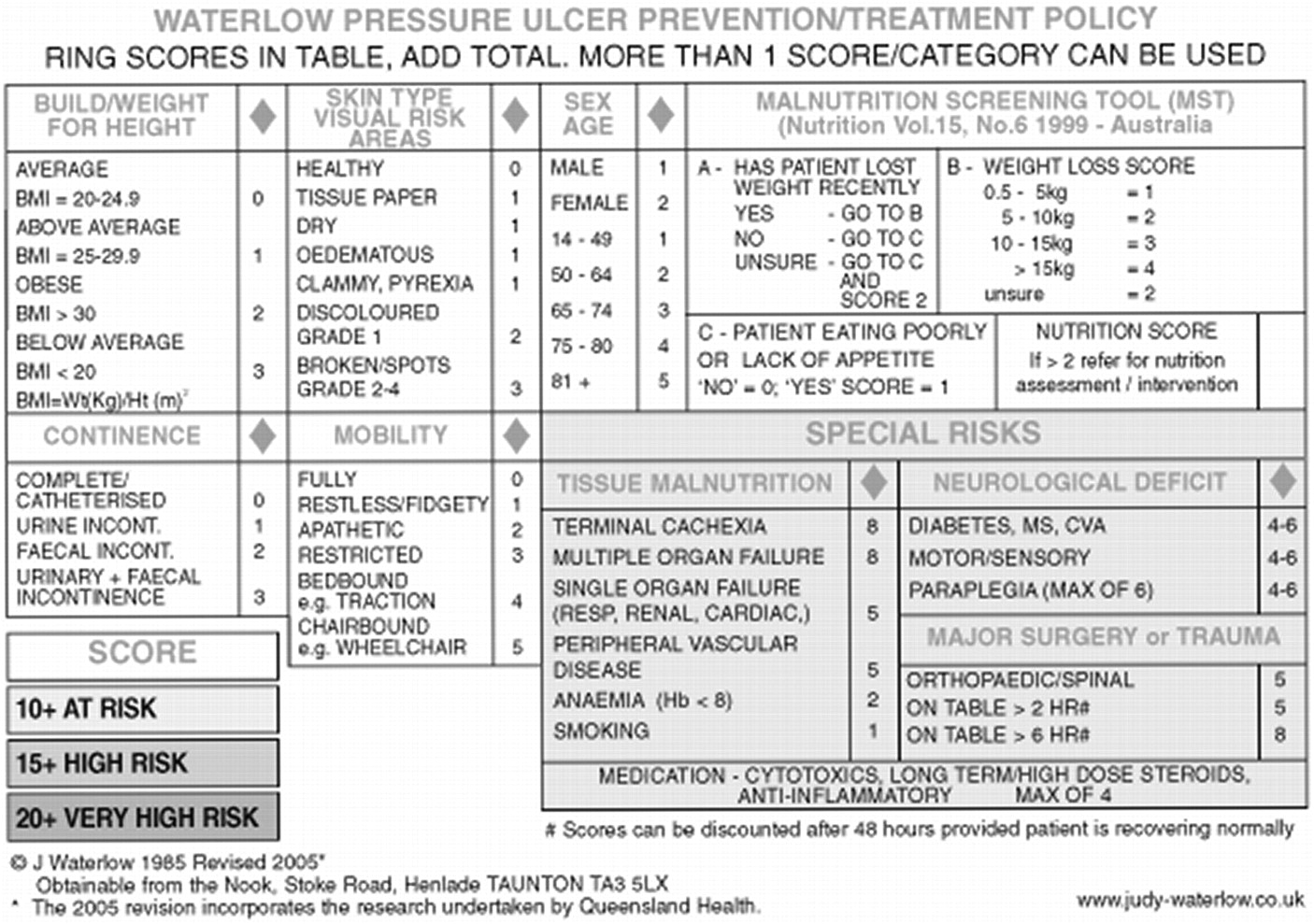
The areas that were assessed included:
- Age and sex: Female (score 2); Age 79 (score 4)
- BMI: Bettys BMI was average (score 0);
- Continence: Urinary occasionally incontinent (score 1)
- Mobility: Restless (score 1)
- Neurological deficit: Alzheimers disease (score 4)
- Malnutrition screening tool: Weight loss score: unsure (score 2)
- Tissue malnutrition: Smoking (score 1) Peripheral vascular disease (score 5)
The nurse calculated that Bettys Waterlow score came in at 20, which puts her in the very high risk category. On completion of the assessment the nurse immediately ordered an air mattress and cushion, and then referred Betty to a tissue viability nurse.
INTELLECTUAL ASSESSMENT
Betty has been recently diagnosed with Alzheimers disease, on interaction she requires a hearing aid to communicate effectively. Although Betty is pleasantly confused at times, when lucid, Betty comes across as a highly intelligent lady and very articulate.
EMOTIONAL ASSESSMENT
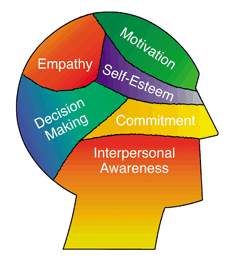
On interaction with Betty and with Jacks input, the nurse was able to determine her emotional awareness. She identified that Betty clearly had deficits in decision making, interpersonal awareness, empathy, commitment, motivation and self-esteem. When Betty is confused she often calls out for Mick, her deceased husband.
SPIRITUAL ASSESSMENT
The nurse asked Betty questions including whether she found comfort in any particular religion or group. She was confused at that point, so, Jack informed that his mam had been religious in the past but since the death of Mick, Betty has stopped going to mass. However, when confused she would look for her rosary beads.
THE LEVEL OF ASSISTANCE REQUIRED TO COMPLETE THE ACTIVITIES OF DAILY LIVING
MAINTAINING A SAFE ENVIRONMENT
Betty is semi-independent when mobilising with her Zimmer frame.
- Requires the supervision of one when mobilising to guide her to the toilet, dining room and to the activities room as sometimes she forgets her limitation with her mobility and poses herself more at risk of falls.
- Betty needs to have her call bell and most frequently used personal items within reach.
- Betty needs to have verbal reminders to Betty to utilise the call bell when assistance is required.
- Betty needs to have an uncluttered environment and adequate lighting. She needs to be provided with a night light as Betty may get up at night to use the toilet.
- Betty needs to have shoes that are well fitting and have non-slip soles.
- Betty needs to have a chair with arms to assist her with rising.
- Betty needs to have clothing that she can easily manage when she gets up to the toilet unassisted.
- Betty needs to be monitored during the night if she gets up she needs to be offered assistance and guidance.
Betty has gout and Arthritic pain.
- Betty needs to be supervised when mobilising in acute episode of pain due to exacerbation of gouty arthritis. Acute pain will alter Bettys mobility and will make her unsteady on her feet.
- Betty needs to be in a comfortable position, joint pain (leg) rested and given bearing. Rest can reduce local metabolism and reduce joint movement occurs.
- Betty needs to have a warm or cold compresses applied as it can provide relief from pain and also promote good blood circulation and promote healing.
- If joint swelling occurred on her toes specifically on her big toes, she needs to avoid irritations on the site by avoiding the use of a narrow shoe or tripping over a hard object. If irritation persists the site will be more painful.
- Betty needs the nurse to administer medications such as analgesics/ anti- inflammatory and medications to lower down serum uric acid level and for the nurse to observe Betty for side effects to the drugs.
- Betty needs the staff to ensure to maintain Bettys room clutter free to avoid the risk of tripping.
- Betty needs her blood urea to be monitored as required by GP.
COMMUNICATION
Confusion and intermittent Hallucinations:
- Bettys deterioration in her cognitive status needs to be monitored.
- MMSE is now 10/30 indicating a moderate cognitive impairment.
- Of late, Bettys general condition has deteriorated due to multiple infections and ? a progression in old age illness.
- Betty needs her GP to continuously review and communicate with Betty and her family to update them regarding her current condition.
- She now requires A of one for most ADLs and is now a high risk of falls
- When having hallucinations, Betty needs to be provided with comfort and reassurance verbally and non-verbally until she settles as this can be a frightening time.
- Betty needs the staff to use Distraction techniques by making reference to her family, whom Betty is very close to, as this lessens the impact of the hallucinations.
- Betty needs the staff to liaise with GP as required for treatment and management of infections to reduce the occurrence of the hallucinations.
Betty requires a hearing aid:
- Betty needs to be encouraged and reminded to wear her hearing aid at all times.
- Betty needs the staff to reduce the background noise when communicating with Betty.
- Betty needs the staff to speak clearly and make eye contact with her and observe the devise if it requires battery replacement.
Vision
- Betty needs the staff nurse to administer Hyloforte eye drops to Bettys eye as prescribed
- Betty needs to have her most frequently used objects within easy reach.
- Betty needs the staff to keep Bettys furniture in same place and not rearrange her furniture.
- Betty needs to be prompted to wear her glasses when reading.
BREATHING
Betty smokes ten cigarettes daily.
- Betty needs to be encouraged to cut down on the cigarettes.
- Betty needs the staff to divert her attention when she asks to go out for a cigarette.
EATING AND DRINKING
Betty is semi-independent in eating and drinking but needs prompting on occasion when in a confused state.
Betty has hypothyroidism.
- Betty needs the staff nurse to administer levothyroxine 50mg alt days and levothyrosin 100mg alt days as prescribed.
- Betty needs to be encouraged to take low calorie, low cholesterol diet to avoid increase in weight.
- Betty needs to be observed for signs of constipation, document when BO. She needs to be encouraged to take a high fibre diet and adequate fluid to prevent constipation.
- Betty needs to be observed for the Sick Day Rule as she requires double dose of hydrocortisone for two to three days when she is unwell (fever) as advised by the Endocrinology team.
- Bettys behaviour needs to be monitored for indications of hypothyroidism i.e. lethargy, agitation, confusion. Any changes need to be reported to her GP.
ELIMINATION
Betty is semi-independent in toileting as she needs prompting when confused to go to the toilet and guidance to wipe herself front to back. She is occasionally incontinent and is prone to UTIs
- Betty needs to be provided with an adequate supply of continence wear, slip pad.
- Betty needs the staff to remove wet continence wear from the bin in Bettys bathroom every day.
- Betty needs the staff to offer her cranberry juice regularly with snacks to prevent UTI and avoid further periods of incontinence.
- Betty needs to be observed for complaint of increasing periods of incontinence which may suspect caused by UTI.
- Betty needs the staff to initiate bladder training by providing schedule of regular toileting two to three hours with specified time for her to void.
- Betty needs the staff to remind her discreetly to change continence wear regularly to prevent skin irritation and to ensure she is free from odour of urine.
- Betty needs to be educated about proper hygiene care and proper disposal of wet continence wear.
PRONE TO UTIs
- Bettys urine needs to be observed for appearance, amount, odour and clarity. If infection is indicated, she needs the staff to perform urinalysis and if positive send to lab for C and S testing.
- Betty needs to be encouraged to take fluids in instances of decreased oral fluid intake.
- Betty needs the staff to maintain the fluid balance chart.
- Betty needs to be observed for signs of pain when urinating as well as suprapubic pain; she needs the staff nurse to administer pain relief as prescribed if indicated
- Betty needs to be encouraged to void every two to three hours to clear bladder and eliminate infection.
- Betty needs to be educated on proper perineal care, wiping from front to back.
- Betty needs to be observed for signs and symptoms of UTI such as confusion, urine clarity, smell, fever, urinary frequency.
WASHING AND DRESSING
Betty is semi-independent in washing and dressing when in a confused state.
Personal hygiene
- Betty needs the staff to ensure that she is comfortable to do her wash and that she has sufficient face cloth and towels ready for the wash and to promote Bettys independence but reassure her that the HCAs will assist her to meet her hygiene needs when required.
- Betty requires assistance of one now when showering for Bettys safety in the bathroom.
- Betty needs to be encouraged to carry out her oral hygiene needs daily and after meals.
- Betty needs to be reminded that she attends the hairdresser of her choice once every two weeks and whenever she would like it done.
- Bettys toe nails need to be observed, if she needs a chiropody referral. Bettys chiropody card can be found at the nurses station, however, a private chiropodist can also be arranged for Betty if she requires the service immediately.
SKIN
- Betty needs the staff to assess extent of bruising on a bi-daily basis.
- Betty needs the staff to apply arnica to assist in reducing the bruising.
- Betty needs the staff to administer analgesia if she requires per prescription.
- Betty needs the staff to give her explanations, support and guidance in relation to the management of same.
ORAL HYGIENE
- Betty has been assessed by Mouth Care Assessment Tool, her score is seven. According to this assessment tool she requires Plan A (standard mouth care) mouth care.
- Betty needs to be reminded to brush her teeth twice daily using toothbrush and fluoride toothpaste.
- Betty needs to be provided with a small-headed toothbrush with none foaming gel
- Betty needs to be reminded to remove her dentures both on top and bottom after going to bed and to soak in water with strident overnight.
-
Betty needs to be reminded to rinse in the morning and rinse mouth as well and to apply lip balm regularly.
CONTROLLING BODY TEMPERATURE
Betty is semi-independent regarding controlling body temperature.
When lucid Betty is aware of when she is hot/cold and will dress/undress as appropriate. When confused she requires gentle prompting to put on/take of clothes.
Betty needs to be prompted to put on or take off clothes as appropriate, when confused.
MOBILISATION
Betty mobilises semi-independently with a Zimmer frame.
- Betty needs supervised when walking, if necessary, as she forgets her limitation with her mobility and poses herself more at risk of falls.
- Betty needs the staff to ensure that her shoes are well fitting and have non-slip soles.
- Betty needs to be monitored during the night and if she is getting up, she needs to be offered assistance.
WORK AND PLAY
Betty is semi-independent regarding work and play.
- Betty needs to be informed of what activities are on daily. She loves attending daily morning exercises, reading the paper, music and her favourite is dog therapy.
- Betty needs to be assisted as required by prompting her as to where she has to go.
- Betty always enjoys reflexology and she gets this regularly. She also enjoys Sing Songs and she needs to be reminded that it is on every Monday and Wednesday.
- Betty may go out in a tour with the other residents and activity coordinator.
- Betty needs to be informed when church of Ireland Minister visits for confession and communication.
- Bettys family will continue to assist and support Betty needs to be reminded that she can go out with them whenever she would like to go out for personal and/or family activities.
EXPRESSING SEXUALITY
Betty has always being very particular about her appearance; following the latest fashion trends appropriate for her age; she wouldnt leave the house without her makeup on, even if she was only doing the gardening. She is semi-independent expressing her sexuality.
<
