NURS 655 Assignment Mining Software Exercise
NURS 655 Assignment Mining Software Exercise
This assignment gives
you the opportunity to demonstrate your ability to use data mining software.
Download the program RapidMiner (available for Windows or
MAC IOS 10.8+) from: https://rapidminer.com/ and register using your WCU
student email. (After the 15-day free trial, you can register for a free
education license if youd like. Youll receive an email from RapidMiner with
instructions.)
When you open the program for the first time, tutorials will
automatically come up on the left side of the platforms screen. If you lose
this window, click on the file folder icon a the top and choose the Learn
option to get it back.
Complete each tutorial within the program and take a
screenshot of the results as you finish each one. (list of tutorials provided
below)
After you finish the tutorials, submit your screenshots for
grading.
Basics
Operators and Processes
Modeling
Accessing Data
Filtering and Sorting
Merging and Grouping
Creating and Removing Columns
Changing Types and Roles
More Modeling
Data Handling
Handle Missing Values
Normalization and Outlier Detection
Pivoting and Renaming
Macros and Sampling
Looping, Branching, and Appending
Writing Data
Modeling, Scoring and Validation
Modeling
Scoring
Test Splits and Validation
Cross Validation
Visual Model Comparison
RapidMiner Server
RapidMiner Radoop
See Assignment Resources below for further RapidMiner
support videos.
What is Bitcoin Mining Software?
Where Bitcoin mining hardware is the equipment needed to mine Bitcoin. Bitcoin mining software controls the way this equipment runs, and interfaces with Bitcoin and the different mining pools. The software is used to manage your miner(s) and to optimize their performance.
To better understand the different types of Bitcoin Mining Software we will break these into several different categories:
- ASIC mining firmware
This is the code that is running on the actual device. When you buy a miner from the manufacturer it comes installed with their stock firmware. While this firmware is sufficient to mine Bitcoin, it is not always the best to use. You also have the option of using third-party firmwares that are provided by other companies.
- Monitoring and Management Tool
There are solutions that are solely used to understand the performance of your miner(s). This specialized tool is useful when managing multiple miners to help ensure that each mining device is running properly and efficiently.
- Mining Protocol
This protocol is the communication bridge between the Bitcoin network and the mining pool. Stratum V1 is the most commonly used protocol by the majority of the mining pools. Stratum V1 has some shortcomings, but will be improved upon with Stratum V2. Stratum V2 helps reduce mining centralization, protect miners from having hashrate stolen and improve communication between miners and mining pools.
- Mining Bit-streams
This software is responsible for communication between mining pools and the ASIC firmware. The pool and miners are able to communicate what work needs to be done and how the hashing needs to be used by the mining machines.
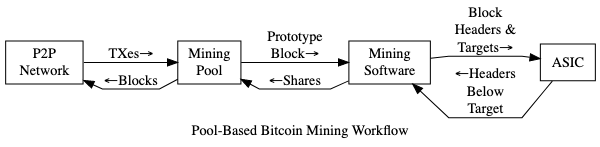
ASIC Mining firmware
By default your mining hardware comes installed with stock manufacturer firmware, but did you know that there are other options that can be used to add additional mining features and even improve mining efficiency
Stock (Manufacturer) Firmware
This is the default firmware that will ship with your ASIC miner. This firmware is a closed-source, internally developed, firmware from the manufacturer.
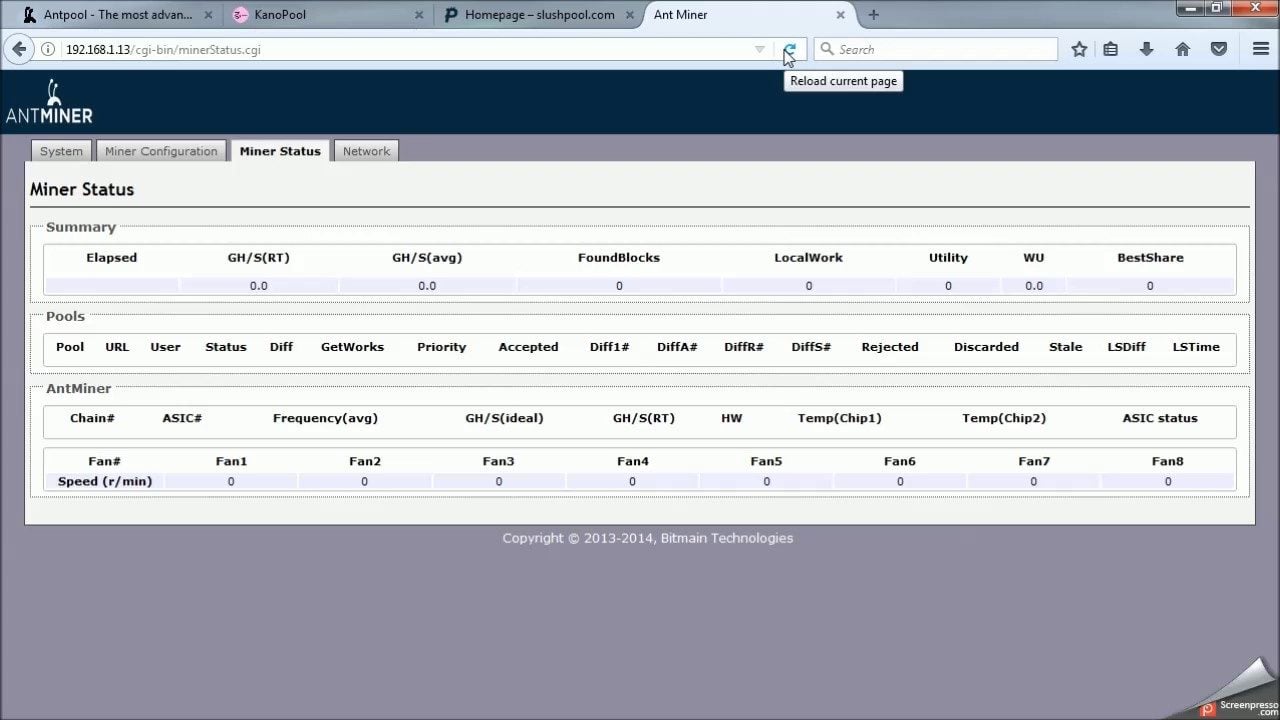
As an ASIC manufacturer, the last thing you would want is for your customers to break their newly acquired equipment.
Manufacturers claim that by keeping the software closed-source they can ensure the miner works correctly and remains secure.
While it may protect your ASIC from damage or improper use, it severely limits the ASICs full capabilities.
Following the ethos of Bitcoin, you may be able to see how closed sourced software is a bad approach for mining hardware manufacturers.
Over the years, there have been a couple of incidents that have shifted users preference away from closed-source stock firmware. Here are a few examples:
Antbleed
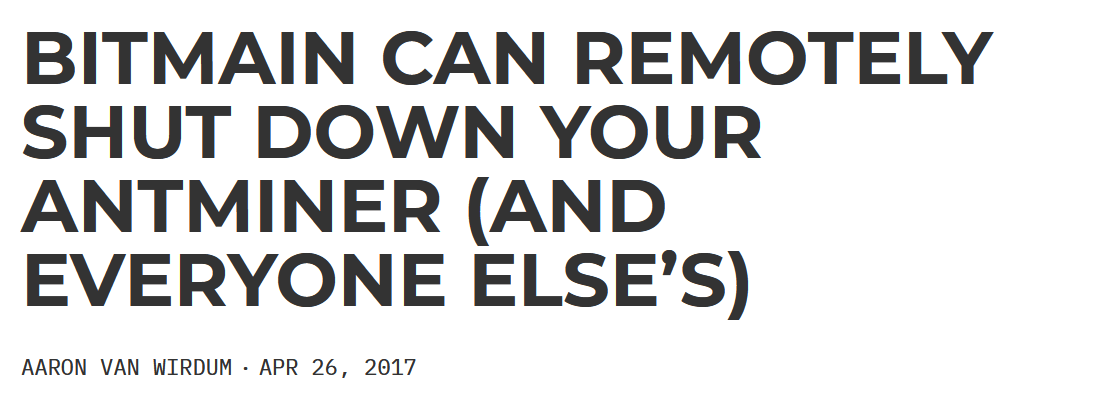
In 2017, a hidden software component called Antbleed was included in ASIC miners created by Bitmain.
It enabled Bitmain to take remote access of any of their customers miners at any given time.
Bitmain argued that this feature was used as a management diagnostic tool, but in reality, this could allow Bitmain to disable any of their customers miners at any time.
AsicBoost
Two researchers by the names Timo Hanke and Sergio Lerner figured out how to tweak existing ASICs so that they could operate 10-20% more efficiently.
The invention was patented and available for manufacturers to add to their hardware. It was determined that the largest ASIC manufacturer, Bitmain, was using AsicBoost for their personal hardware and not sharing this efficiency gain with customers who purchased their equipment.
After criticisms and controversy, Bitmain has come clean and released AsicBoost compatible firmware to their customers.
Exploring open source firmware for your mining hardware can help avoid issues, such as these, while also adding efficiencies and additional features to your Bitcoin hardware.
3rd party Mining Firmware
Some companies have found ways to jailbreak or unlock manufacturers hardware and install custom firmware which allows for numerous benefits that we will explore later.
While there are several larger mining farms running their own proprietary software, there are limited public options for 3rd party firmware.
Using open-source third party firmware helps Bitcoin stay decentralized as no single entity is being relied on for Bitcoins security. We will explore the different options below.
SAVE20
PLACE THIS ORDER OR A SIMILAR ORDER WITH Nursing League TODAY AND GET AN AMAZING DISCOUNT

